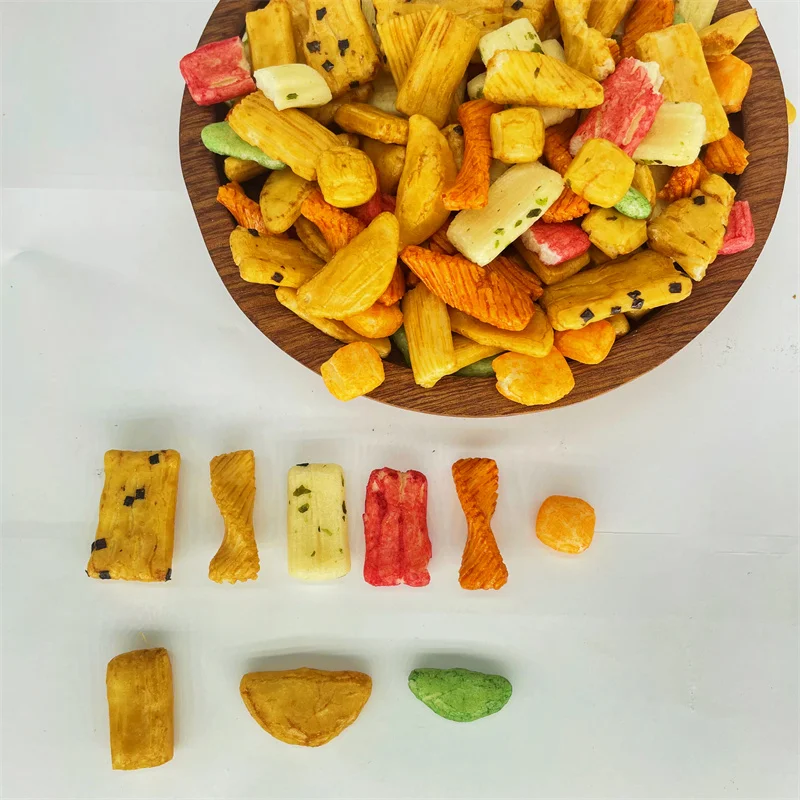
Rice crackers have become a beloved snack across the globe, treasured for their light, satisfying crunch and versatile flavor profiles. Understanding how rice crackers are manufactured reveals the precise balance of ingredient selection, processing techniques, and drying methods that transform simple rice into the crunchy delicacy consumers enjoy. The production of rice crackers involves multiple stages, each critical to achieving that perfect crisp texture that defines quality rice crackers. Whether plain or flavored, every cracker represents the culmination of careful craftsmanship and food science that determines whether rice crackers deliver the satisfying bite consumers expect.
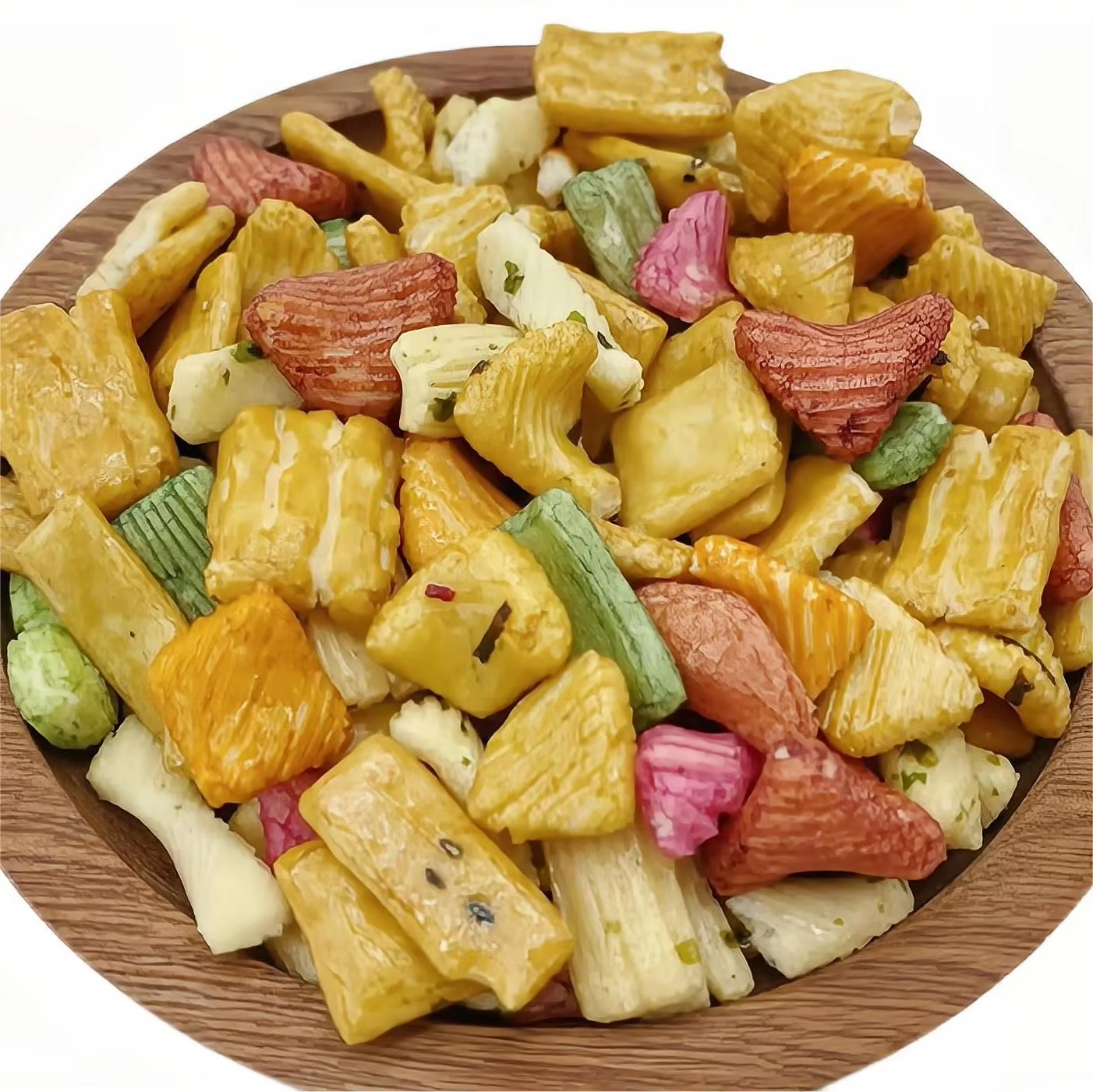
The journey from grain to finished snack is both an art and a science. Rice crackers begin as raw rice kernels that undergo washing, cooking, and shaping before entering the critical drying and frying stages. Modern rice crackers are produced using industrial equipment that ensures consistency, food safety, and optimal texture development. The crisp quality that distinguishes premium rice crackers from inferior alternatives emerges from precise control over moisture levels, frying temperature, and post-production handling. This article explores the complete manufacturing process, from raw material preparation through final packaging, and explains the specific factors that give rice crackers their characteristic crispness.
The foundation of quality rice crackers begins with selecting appropriate rice varieties. Short-grain or medium-grain rice varieties work best for rice cracker production because they contain optimal starch levels that contribute to the final texture. The rice selected for rice crackers must meet strict quality standards including purity, moisture content, and absence of damaged kernels. Producers typically source rice from established suppliers with consistent quality records, as variations in the starting material directly impact the performance of rice crackers during processing. Different rice varieties produce rice crackers with subtly different textural properties, so manufacturers often test multiple sources to achieve their desired crispness profile.
Before processing begins, rice crackers production requires thorough washing of raw rice to remove dust, debris, and any foreign matter. The washing stage removes surface contaminants and excess starch that could interfere with the drying process of rice crackers. Automated inspection systems then grade the cleaned rice, removing any discolored or damaged kernels that would compromise the quality of rice crackers. This preparation phase establishes the baseline quality that rice crackers will maintain throughout manufacturing. Careful handling at this stage prevents damage to individual grains, which is crucial because broken rice particles affect how rice crackers hydrate and crisp during cooking.
Rice crackers production continues when cleaned rice enters large industrial cookers where controlled moisture and heat transform the grain structure. The cooking stage hydrates the rice and partially gelatinizes the starches, creating a moldable consistency necessary for shaping rice crackers into uniform pieces. Temperature and duration of cooking are precisely controlled because over-cooking creates mushy rice crackers while under-cooking leaves them too brittle to shape properly. The cooked rice used for rice crackers typically reaches a specific moisture level that allows it to hold together during the shaping process without becoming too soft. Industrial cookers for rice crackers often use steam injection to distribute heat evenly and prevent localized burning or inconsistent texture.
Once cooked, the rice mixture for rice crackers moves to forming equipment that shapes the material into uniform thickness sheets or individual cracker shapes. Modern production of rice crackers employs roller presses or extrusion equipment that creates consistent dimensions, which is essential for uniform cooking and crisp development in rice crackers. The thickness of shaped rice crackers directly influences how quickly they dry and their final crispness level. Thinner rice crackers typically achieve greater crispness, while thicker variants maintain more chewiness in the center. The shaping stage of rice crackers production establishes the moisture distribution pattern that will ultimately determine the crispness profile achieved after drying and frying.
The drying process fundamentally determines whether rice crackers achieve their signature crisp texture. After shaping, rice crackers enter drying chambers where temperature and humidity are carefully controlled to remove moisture gradually and uniformly. Initial drying of rice crackers occurs at moderate temperatures to prevent case-hardening, which is a phenomenon where the exterior dries too quickly, trapping moisture inside and creating soggy rice crackers. Progressive drying stages for rice crackers use gradually increasing temperatures to fully remove moisture while developing the brittle structure necessary for crispness. Most modern rice crackers production facilities use multi-zone dryers that precisely regulate conditions, ensuring that rice crackers reach target moisture levels typically between two and four percent.
The final crisping stage transforms dried rice crackers through frying in controlled oil environments. When partially dried rice crackers enter hot oil, residual moisture rapidly converts to steam, which puffs the cracker and creates the characteristic light, airy structure that defines quality rice crackers. The frying temperature for rice crackers must be precise because too-cool oil results in greasy, soggy rice crackers while excessive heat burns them and creates bitter flavors. The duration of frying rice crackers typically ranges from seconds to minutes depending on thickness and desired final color. After frying, freshly made rice crackers are drained to remove excess oil, which improves shelf stability and contributes to the clean, crisp mouthfeel consumers expect from premium rice crackers.
Many rice crackers receive flavoring after the frying stage through dry seasoning blends, specialized coatings, or seasoning oils applied while the crackers remain warm. This timing allows seasoning particles to adhere effectively to rice crackers and distribute flavor throughout each bite. The application method for seasoning on rice crackers influences whether flavor coats the exterior or penetrates partially into the structure. Quality seasoning application preserves the crispness of rice crackers while ensuring consistent flavor throughout the batch. Specialized equipment tumbles rice crackers with seasoning to ensure uniform coverage without breaking the delicate structure that defines great rice crackers.
Maintaining crispness in rice crackers continues through packaging decisions that minimize moisture absorption. Rice crackers are typically packaged in moisture-barrier materials that protect against ambient humidity, which is the primary factor affecting rice crackers' texture during distribution and retail display. Nitrogen flushing inside packaging prevents oxidation that would accelerate staleness in rice crackers. The quality of rice crackers at point-of-sale depends directly on successful moisture management throughout packaging and logistics. Proper storage conditions preserve the crispness that consumers purchased rice crackers to experience.
The most critical factor for achieving crispy rice crackers is precise moisture control during the drying stage. Removing moisture uniformly without case-hardening creates the brittle structure necessary for crispness in rice crackers. When manufacturers successfully balance drying temperature and duration, rice crackers develop the ideal texture. Subsequent frying further enhances this crispness through steam expansion within the cracker structure. Maintaining low moisture levels during packaging preserves the crisp quality of rice crackers from factory through consumption.
Rice crackers lose crispness when exposed to moisture, which causes starches to soften and the structure to become chewy. Improper packaging allows rice crackers to absorb humidity from the environment, degrading texture within days or weeks. The initial moisture content of rice crackers influences their shelf stability, with properly dried rice crackers maintaining crispness significantly longer. Freshly made rice crackers contain lower moisture and stay crispy far longer than older inventory. Environmental storage conditions matter greatly, as rice crackers stored in humid environments become soft much faster than those kept in dry conditions.
Yes, manufacturers can control crispness in rice crackers by adjusting multiple production variables including cracker thickness, drying temperature duration, frying time, and final moisture content. Thinner rice crackers typically achieve greater crispness than thicker variants because moisture escapes more completely. Higher drying temperatures create crispier rice crackers, though excessive heat damages flavor and color. Frying duration also influences crispness in rice crackers, with longer frying generally producing lighter, crispier results. Manufacturers can dial in specific crispness levels for different market preferences through careful parameter adjustment in their rice crackers production process.

 EN
EN

 Hot News


